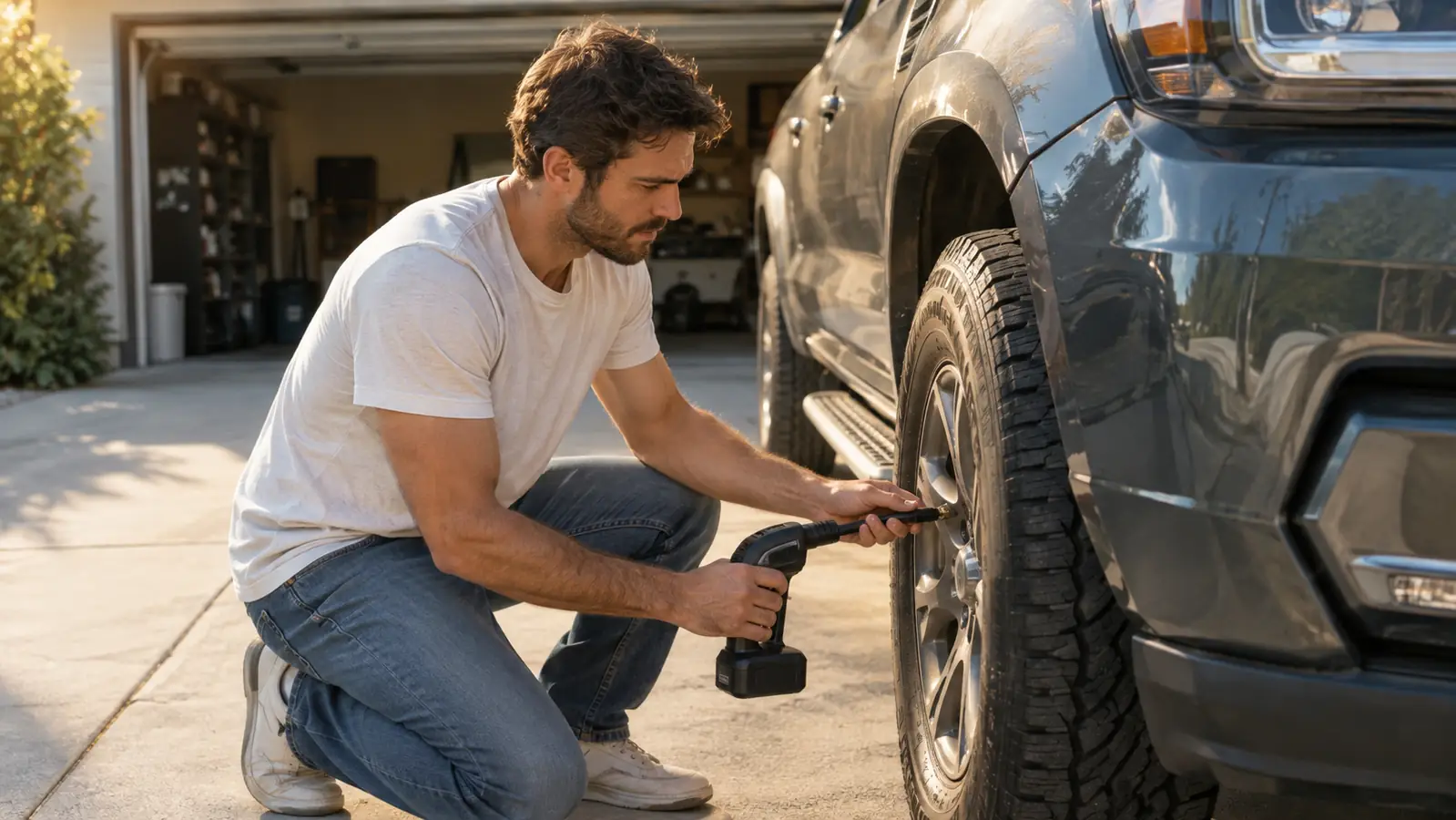
For about 30 years, my answer to a low tire was the same as most folks: drive to the gas station, feed the machine a couple of quarters, and stand there listening to the compressor rattle while the digital readout crawls toward the number I wanted. It worked, most of the time. It also meant a low tire on a Sunday evening turned into a 20 minute errand, and a tire that needed topping off every few weeks turned into a standing appointment I never wanted. So when the Avid Power cordless tire inflator showed up in my garage, I figured it would either earn a permanent spot on the shelf or end up in the drawer with the other gadgets I bought once and forgot.
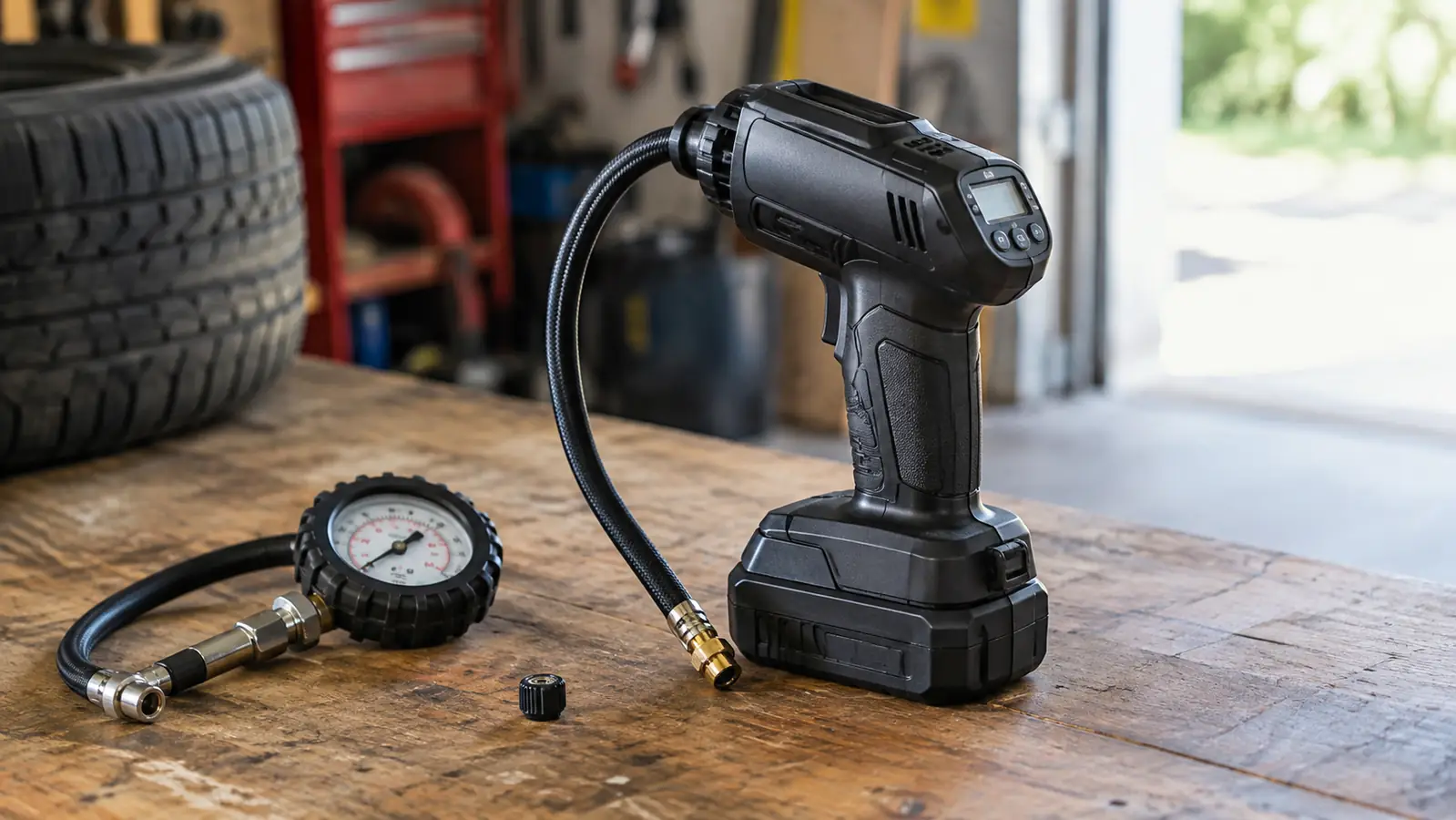
I have used the Avid Power inflator for about six months now, mostly on my 2012 Ford F-150 and on a few neighbors' cars, and I have a pretty clear picture of where it beats the gas station air hose and where it does not. The short answer: for a weekend mechanic who checks pressures at home, the cordless inflator wins on convenience, consistency, and not having to leave the driveway. The gas station still wins on raw speed for a completely flat tire, and it costs nothing if you are already there. Here is the honest breakdown.
| Avid Power Cordless Inflator | Gas Station Air Hose | |
|---|---|---|
| Convenience | Inflate any tire in your driveway, no trip required | Requires driving to the station, waiting in line, and feeding coins or a card |
| Consistency | Set the target pressure, it stops automatically at the number you chose | You watch the gauge and stop it yourself, easy to overshoot or undershoot |
| Speed for a low tire | A few minutes per tire for typical top-offs | Faster airflow, especially for a tire that is completely flat |
| Cost per use | One-time purchase, no coins or card fees | Usually a dollar or two per visit, or free if the station offers it |
| Portability | Runs on a 20V battery, works in the garage, the driveway, or the side of the road | Only works where the station is, and only if the hose reaches your tire |
| Best for | Weekly checks, seasonal pressure changes, and topping off at home | Emergency fills after a puncture or a tire that has been sitting flat for days |
Where the Avid Power Inflator Wins
The biggest difference is not the inflator itself, it is where you get to use it. With the gas station hose, every low tire is an errand. You have to find a station with a working compressor, park close enough for the hose to reach, and hope the machine takes your card without making you watch a 30 second video first. With the Avid Power inflator, I walk to the truck, screw the hose onto the valve stem, set 38 psi, and walk away. It shuts off on its own when it hits the number. That automatic shutoff is the feature I did not expect to care about, and now I would not want to give it up.
It is also consistent in a way the gas station hose never was. Station compressors vary wildly. One fills fast and reads high, another reads low and takes forever, and a third has a gauge that bounces around so much you just guess. The Avid Power inflator reads the same way every time, and I have checked it against my own tire pressure gauge often enough to trust it. For a truck like mine that sits for a few days between drives, that consistency matters. I can top off all four tires in the driveway in about the time it used to take me just to drive to the station.
The morning that sold me was a Tuesday in late September. I had pulled the truck out of the garage to run to the hardware store, and the low pressure light came on before I reached the end of the driveway. The front passenger tire read 31 psi on the dash, which is about 7 pounds low for that truck. Old habit said to grab my keys and find a station. Instead I walked back into the garage, grabbed the Avid Power inflator off the shelf, and set it to 38 psi. It took right at four minutes to bring that tire up from 31, and it shut itself off at 38 without me standing over it. I checked it with my pencil gauge afterward and it read 38. I have had gas station hoses that were off by more than that on a good day.
That same week I did something I never would have done with a station hose: I checked all four tires on a Sunday afternoon just because I had the inflator in hand. The rear tires were both at 34, the fronts were at 36 and 37, and the spare in the bed was down to 41 when it should have been 50. Ten minutes with the Avid Power unit brought everything to the door sticker numbers, including the spare, which had not been touched in months. A gas station trip would not have happened for a spare that was only 9 pounds low, and that is exactly the kind of neglect that leaves you with a useless spare on the side of the interstate.
Skip the gas station run and inflate all four tires in your own driveway
The Avid Power cordless tire inflator sets your target pressure and shuts off automatically, so you can top off the truck, the neighbor's sedan, or a trailer tire without leaving the garage.
Amazon Check Today's Price on Amazon →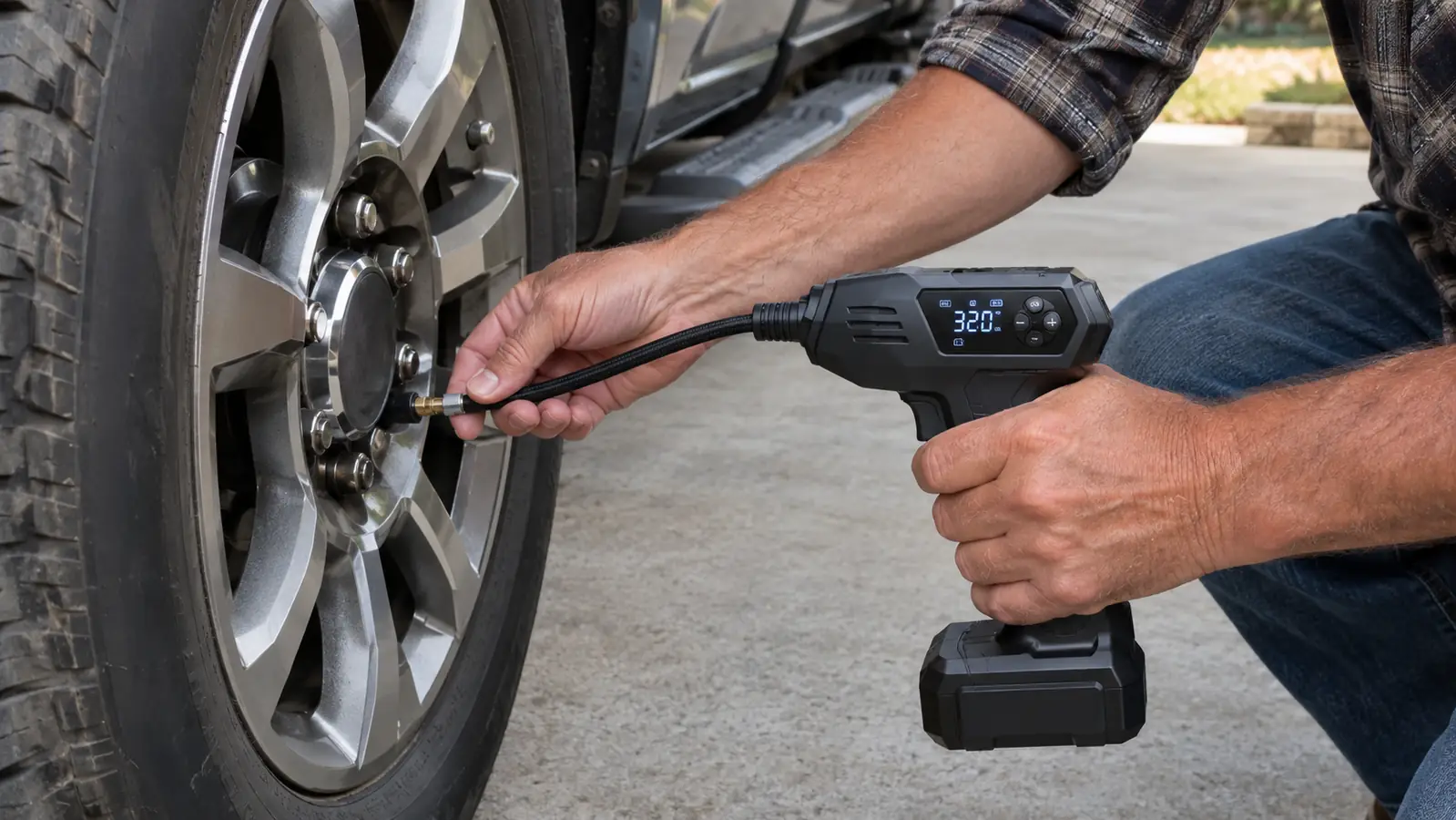
Where the Gas Station Air Hose Wins
I am not going to pretend the gas station has no place. If you come out to a tire that is completely flat, the kind that is sitting on the rim, the station compressor moves a lot more air than a cordless inflator ever will. The Avid Power unit will get there, but it takes a while, and on a big truck tire you will be standing there for several minutes while the battery works. If I had a flat on the way to work, I would still stop at a station and use their hose to get enough air in to make it to a shop. That is the honest answer.
To be fair to the gas station, the machines have gotten better. Many now let you set a target pressure and beep when you reach it, which takes care of the guessing. The trouble is you never know which kind you will find. Half the stations near me still have the old style hose with a gauge that is either missing or broken, and a few charge for air that is free down the road. When the station works, it works. When it does not, you have driven on a low tire for nothing and still have to fix it.
The other thing the gas station has going for it is that it is already there. If you are on a road trip and you notice a tire is low, you are not going to pull a cordless inflator out of the bed unless you planned ahead. The station is part of the trip. And if the station offers free air, which a few around here still do, the cost is zero. For a one-off emergency, the gas station is the right tool. For the weekly and seasonal maintenance that actually keeps tires healthy, it is the wrong tool, and that is where the Avid Power inflator earns its place.
I tested that difference on purpose back in October. I let the rear driver side tire on the truck drop to 18 psi, which is low enough that the sidewall bulges when you look at it, and then timed both ways of filling it. The gas station hose, the big industrial one at the Shell on Highway 41, took about a minute and a half to bring it from 18 to 38. The Avid Power inflator took just over nine minutes, and I could feel the hose getting warm by the end. It did the job, and the battery still had plenty left afterward, but I would not want to do that every week. For a tire that is merely low, the cordless unit is fine. For a tire that is flat, the station compressor is the faster tool and I will not argue with that.
I also learned that the station hose is better when the temperature drops hard. The first cold snap in November dropped the overnight temps into the upper twenties, and every tire on the truck lost about 2 pounds overnight. I caught it on a Friday morning before work, and I did not have time to stand in the driveway for four or five minutes per tire. The station on the way to the highway had a working hose, and I topped off all four in about four minutes total, including the walk to the pay machine. That is a real advantage: when you are in a hurry and already on the road, the station is simply faster per tire.
Who Should Buy Which
If you are the kind of person who checks tire pressure when the low pressure light comes on, and not a moment before, the gas station hose is probably fine. You are not going to get enough use out of a cordless inflator to justify the purchase. But if you check pressures once a month, if you adjust them when the seasons change, or if you have a trailer, a lawn mower, or a second vehicle that always seems to be low, the Avid Power inflator will pay for itself in saved trips and frustration.
For me, the decision came down to a simple question: how often do I actually need air, and how much do I hate the gas station run? The answer was often enough, and enough. The Avid Power inflator now lives on the shelf next to my jack stands, and the gas station hose is my backup for the rare emergency. That is the right order for a weekend mechanic who wants to spend less time on errands and more time actually working on the truck.
One more thing worth mentioning: the Avid Power inflator has been useful for things that never would have justified a trip to the station. I topped off the tires on my neighbor's sedan when he was heading out of town, and I used it to bring a trailer tire up from 25 to 50 psi before a trip to the dump. I have also used it on the lawn mower, which has small tires that the gas station chuck does not even fit well. None of those jobs would have gotten done if they required a drive, and that is the real value of having the tool at home. The gas station hose is for emergencies. The Avid Power inflator is for everything else.
The way I think about it now is simple. The gas station hose is a tool for the road, and the Avid Power inflator is a tool for the driveway. One is for the rare morning when you are already late and the tire is already low. The other is for the routine that keeps that from happening in the first place. I still stop at the station when I am on a trip and the pressure looks off, and I still keep a couple of quarters in the console out of habit. But the inflator on the shelf is what actually gets used, and after six months that has not changed. If you do your own maintenance and you are tired of making a trip every time the seasons change, that is the trade worth making.
Keep a cordless inflator in the garage and make the gas station your backup, not your routine
Set the pressure, let the Avid Power inflator do the rest, and keep your tires where they should be without leaving the driveway.
Amazon Check Today's Price on Amazon →