
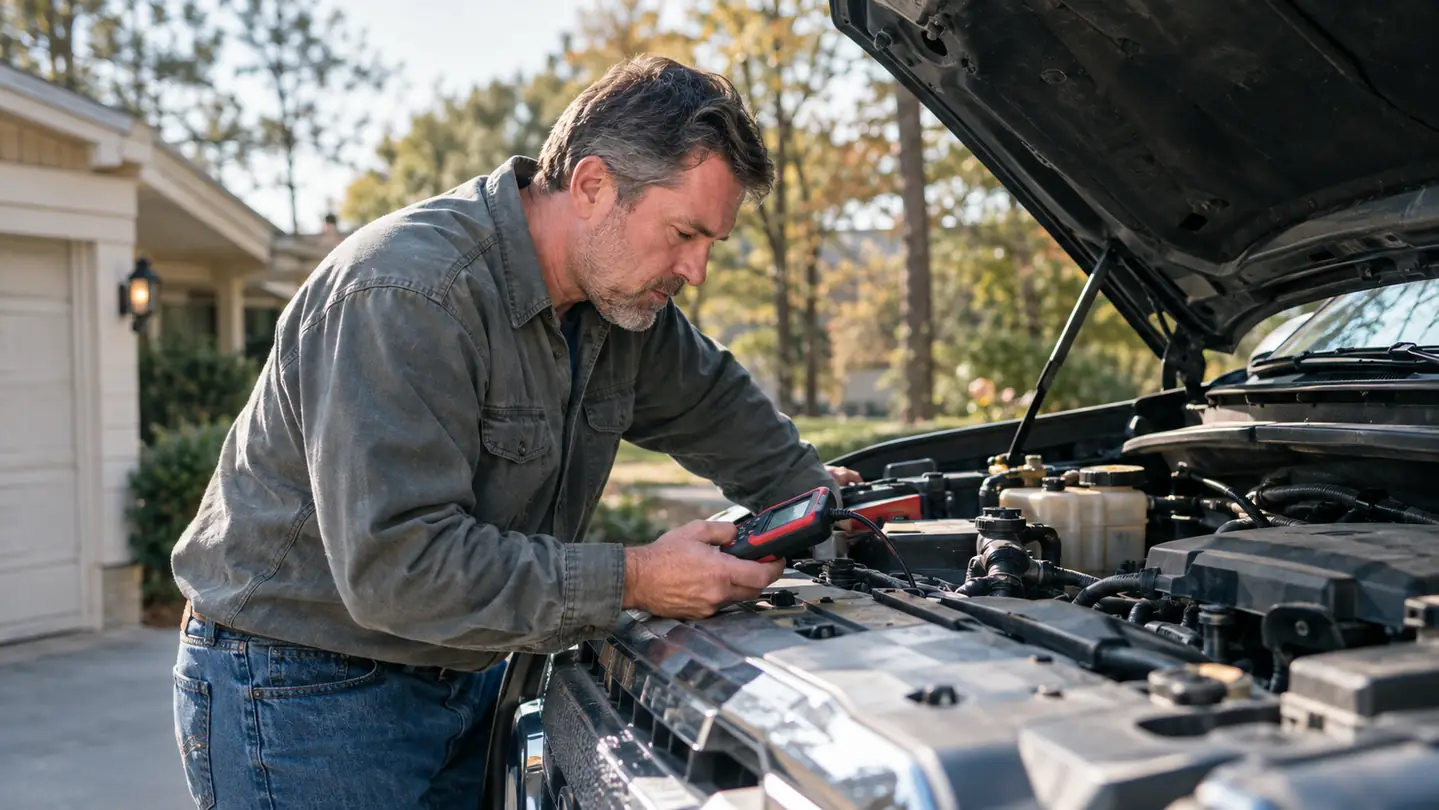
If you are the kind of person who changes their own oil and brakes, you have probably stared at a check engine light and wondered whether the trip to the parts store was worth it. I have been doing my own work in the driveway outside Dalton, Georgia for about 30 years, and I have owned a lot of code readers in that time. The ANCEL AD310 is the one I keep reaching for when I just need to know what the truck is complaining about. But a neighbor asked me whether he should spend more on a BlueDriver, so I ran both on my 2012 F-150 and on his sedan for a month. Here is the short answer: the ANCEL AD310 is the better buy for a weekend mechanic, and the BlueDriver only makes sense if you want live data and advanced features on your phone.
I came into this comparison with a bias, and I will name it. I have used plug-in code readers for years and I like tools that do one job without asking anything of me. So I made a point of giving the BlueDriver a fair shake, using it as my main scanner for a few weeks, reading its reports all the way through, and trying the features I would normally skip. What follows is what I found, including the parts that surprised me and the one job where the cheaper tool simply could not keep up.
The AD310 is a plain, no-nonsense code reader. It plugs into the OBD2 port under the dash, reads engine codes, and clears them. That is what most of us actually need. The BlueDriver is a Bluetooth adapter that turns your phone into a scan tool, with live sensor data, smog check readiness, and a code library. It does more, and it costs more. The question is whether the extra features earn their keep in a driveway, not in a shop.
The BlueDriver is a different animal. It is a small Bluetooth sensor that stays plugged into the port and talks to an app on your phone. The app reads the code, pulls a plain-language explanation, and on many vehicles can reach past the engine computer into other modules. It also shows live data, which means you can watch sensor readings change while the engine runs. On paper that makes it the more capable tool, and it is. It also costs several times what the AD310 does, depends on your phone being charged and paired, and asks you to learn an app. I used both on the same vehicles over the same stretch of weeks so the comparison would be fair.
Setup tells you a lot about each tool. The AD310 has no setup at all. You take it out of the box and plug it in. The BlueDriver took me about fifteen minutes the first time: download the app, make an account, pair the sensor, and enter the vehicle details so it can pull the right reports. None of that is hard, but it is the kind of thing you want done in the garage, not on the shoulder of the highway with traffic going by. After the first time it reconnected on its own, though now and then it needed a second try before it found the sensor.
| ANCEL AD310 | BlueDriver | |
|---|---|---|
| Price | Budget friendly, often under what a single shop diagnostic visit costs | Roughly three times the price of the AD310 |
| Setup | Plug in and read, no app, no pairing, no account | Download app, create account, pair Bluetooth |
| Code reading | Reads and clears engine codes on 1996 and newer vehicles | Reads and clears engine codes, plus live data and enhanced diagnostics |
| Live data | None, it is a code reader, not a scan tool | Full live sensor data on your phone |
| Smog check readiness | Not supported | Shows I/M readiness monitors before an emissions test |
| Ease of use | One button, works even if you are not good with phones | Easy once the app is set up, but the app is the whole experience |
| Build quality | Solid plastic housing that has survived a hot Georgia summer in my truck | Small plastic adapter that lives in the glove box |
| Best for | Weekend mechanics who want a fast answer and a clear code | Hobbyists who want to watch sensors and graph data |
Where the ANCEL AD310 Wins
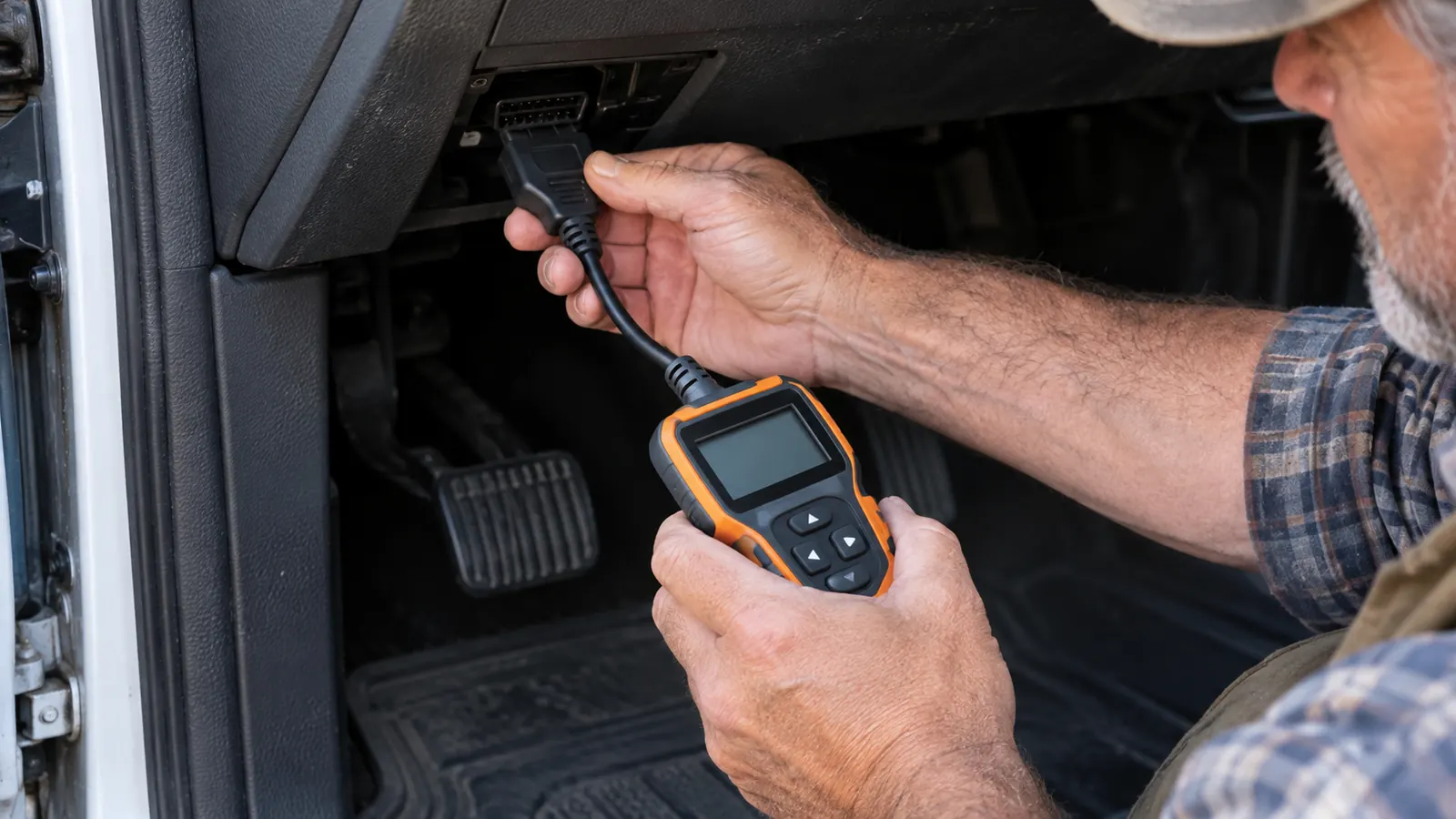
The AD310 wins where it matters most for a driveway mechanic: it is simple and it is cheap. There is no app to install, no Bluetooth pairing, no account to create. You plug it into the port under the dash, turn the key, and it gives you the code. When I pulled a P0301 on my F-150 last month, I had the answer in under a minute. I did not have to dig my phone out of my pocket or wait for an app to update. That matters when you are lying on your back on a concrete driveway with a flashlight in your mouth.
Here is what that looked like on a real morning. The check engine light came on in my truck on the way to the hardware store. I pulled into the lot, reached under the dash, plugged in the AD310, and had the code on the screen before the engine had cooled off. It was a misfire code on one cylinder. I wrote it down on the back of the receipt and drove home. With the BlueDriver, the same job meant opening the app, waiting for it to find the sensor, and letting it run its scan. It got there, and it gave me more detail, but it took a couple of minutes longer and I had to read it on a phone screen in the sun. For a quick look, the cable wins every time.
It is also built to be thrown in a tool box and forgotten until you need it. The housing is solid, the buttons are big enough to use with greasy fingers, and the display is easy to read in direct sunlight. I have left mine in the truck through a north Georgia summer, and it still works like the day I bought it. For the price, you can keep one in every vehicle you own and still spend less than a single trip to a shop for a diagnostic.
That toughness is not a small thing. My AD310 rides in a door pocket, and it has been through a north Georgia summer where the cab gets hot enough to warp a cheap sunglasses case. It does not have a battery to swell or a charge to keep. The BlueDriver is fine in heat too, but because it works through your phone, the weak link is the phone. Twice during testing my phone was low enough that I did not want to burn the battery on a scan. That never happens with a tool that draws its power from the truck. If you keep one scanner in the vehicle for emergencies, the simplest one is the one that works every single time.
Cost is the other part of the win. The AD310 sells for a fraction of what the BlueDriver does, and for a driveway mechanic who reads a code a few times a year, the difference buys a lot of parts. I would rather put the savings toward a quality sensor or a set of plugs than toward features I would use twice. If you are the kind of person who handles oil, brakes and bulbs yourself and wants to stop paying for someone to read a code, the AD310 covers that job completely. Extra capability you never use is not value, it is just more to carry and more to learn.
Where BlueDriver Wins
I will be honest: the BlueDriver does things the AD310 cannot. The live data view is genuinely useful if you want to watch coolant temperature climb in real time, or see what the oxygen sensors are doing while the engine idles. The app also shows smog check readiness, which tells you whether your car will pass an emissions test before you waste an afternoon at the testing station. If you are chasing an intermittent problem, being able to graph sensor data on your phone is a real advantage.
Where that showed up for me was on my neighbor's sedan. It had an intermittent lean code that kept coming back a week after he cleared it. The AD310 could read the code and clear it, and that was the end of its usefulness. The BlueDriver let me watch the short term fuel trims at idle and then again with the engine held at about 2,500 RPM. The numbers pulled back toward normal at higher RPM, which pointed to a vacuum leak rather than a weak fuel pump. A spray bottle of soapy water found a split hose behind the intake. That is the kind of job where live data saves you from buying the wrong part, and the AD310 simply cannot do it.
The BlueDriver also explains codes in plain language inside the app, with possible causes and common fixes. That is a nice feature when you are staring at a code you have never seen before. But here is the thing: I have a 30 year old habit of looking codes up on my phone anyway, and the AD310 gives me the same four digit code to search. The extra explanation is convenient, not essential. For a weekend mechanic, the BlueDriver is a nice tool to borrow, not one I would buy with my own money.
It also reaches places the AD310 does not. On many makes the BlueDriver can read codes from the ABS, airbag and transmission modules, which a basic engine code reader will not touch. When a warning light other than the check engine light comes on, that matters. I will add one caution I learned the hard way: what the app can read depends on the make, model and year, so check its vehicle coverage before you count on it for a specific job. Even then, an airbag or brake warning is a signal to slow down. Reading the code is fine. Working on those systems yourself is a different decision, and often one for a shop.
Start with the code reader that just works
The ANCEL AD310 reads and clears engine codes on 1996 and newer vehicles, with no app and no pairing. It is the tool I keep in my truck.
Amazon Check Today's Price on Amazon →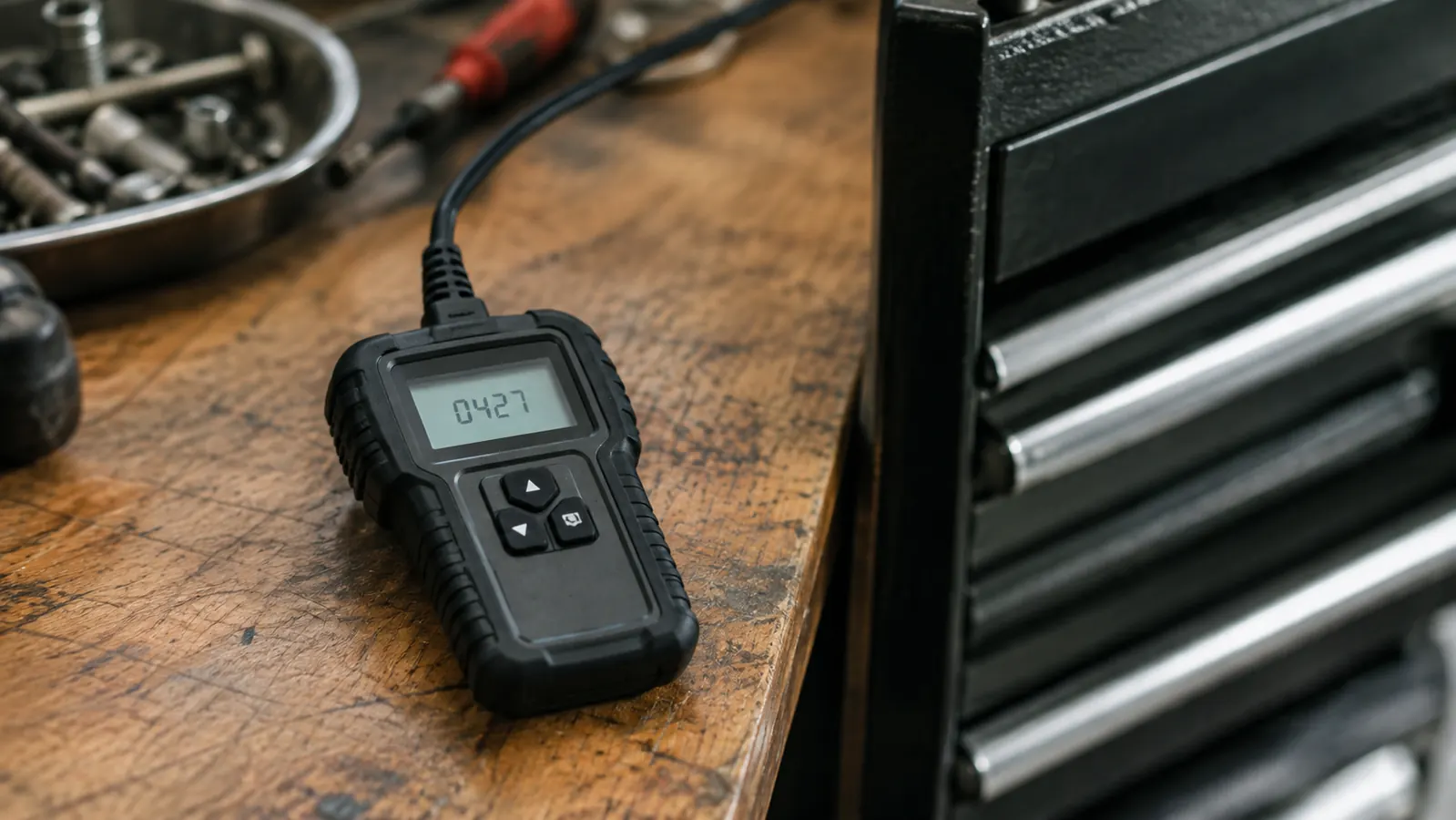
Who Should Buy Which
Buy the ANCEL AD310 if you are a weekend mechanic who wants to know why the check engine light is on, fix the problem, and clear the code. It is also the right choice if you are buying a first code reader, if you are not comfortable with phone apps, or if you want a spare to keep in the glove box. It does one job and does it well, and it costs about what a single diagnostic visit would cost at a shop.
To put numbers on my own use: over a few months I read codes on my truck and a handful of family and neighbor vehicles. Most of those visits were a loose gas cap, a misfire from a worn plug or coil, an evaporative leak, or an oxygen sensor. The AD310 handled every one of those to the point where I knew what to look at next. Only one job, the intermittent lean code, truly needed live data. If your experience looks like mine, you will reach for the simple tool almost every time and borrow or rent the fancy one on the rare day you need it.
Buy the BlueDriver if you are the kind of hobbyist who wants to watch live sensor data, graph oxygen sensor readings, or check smog readiness before an emissions test. It is a legitimate scan tool, not just a code reader. But be honest with yourself about how often you will actually use those features. Most of the time, the check engine light just needs a code read and a clear, and the ANCEL AD310 does that in under a minute.
There is also a middle path, and it is what I ended up doing. I keep the AD310 in the truck full time, because it is cheap, tough and fast. If I ever hit a problem the code alone cannot explain, that is the day to step up to a live data tool, or to let a shop with real equipment take over. Starting with the basic reader costs little and teaches you how your vehicle talks. You learn which codes are common, which ones clear themselves after a repair, and which ones mean stop and get help. That knowledge is worth more than any feature list.
Keep it simple with the ANCEL AD310
No app, no pairing, no learning curve. Just plug it in, read the code, and get back to the repair.
Amazon Check Today's Price on Amazon →