
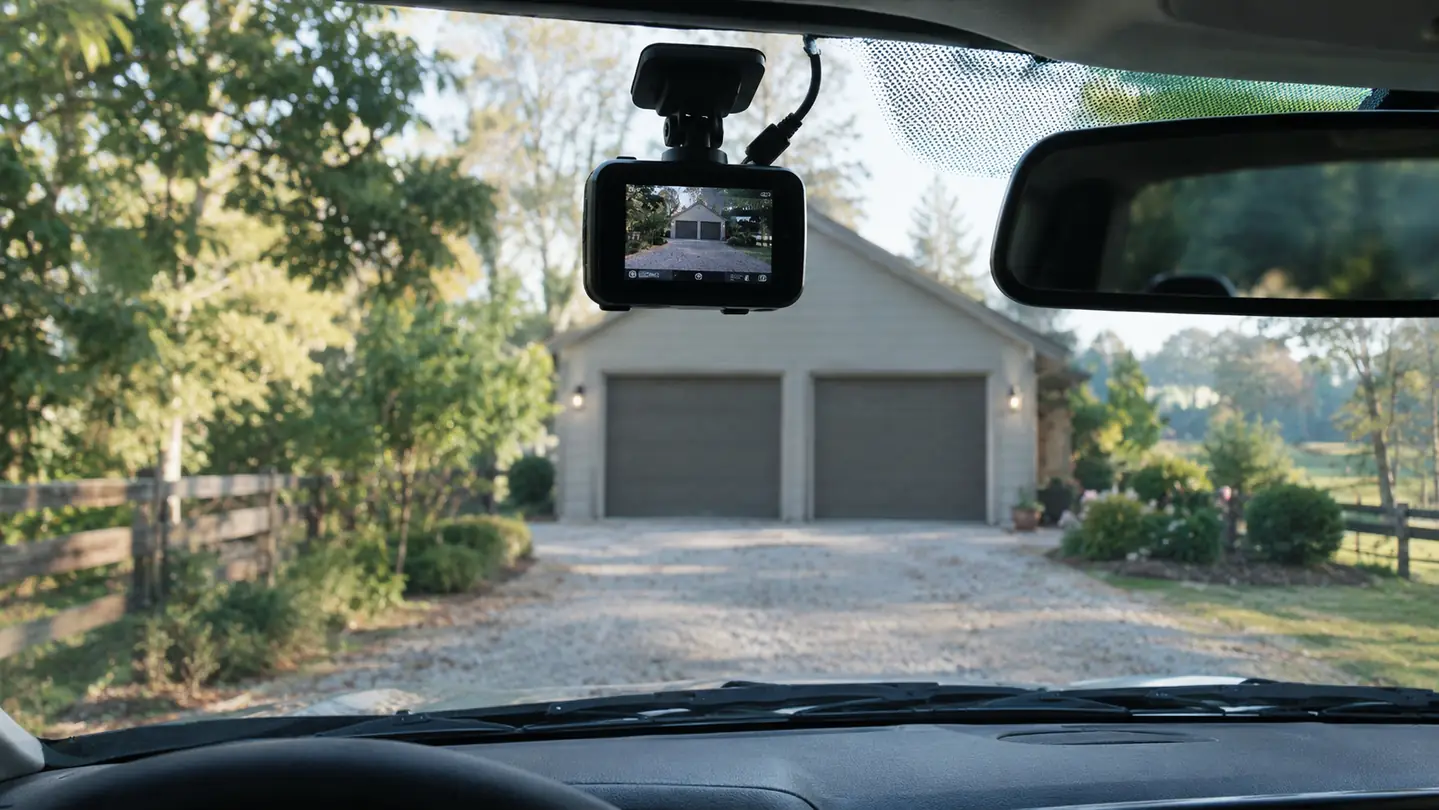
If you do your own work in the driveway, you already know the feeling. You are under the truck with a wrench, the neighbor's kid is riding a bike too close to the road, and you have no idea what happened if something goes sideways. That is why I started looking at dash cams in the first place. I am Wade, I have been turning wrenches in north Georgia for about 30 years, and I drive a 2012 F-150 with 187,000 miles on it. I wanted a camera that could handle a hot Georgia summer and not fall off the windshield on a rough road. I ran the REDTIGER F7NP and the WOLFBOX G840S for a month each, and I will tell you straight which one I kept.
These two cameras take different approaches to the same job. The REDTIGER F7NP is a conventional windshield camera with a small screen, a separate rear camera, and an app for pulling clips to your phone. The WOLFBOX G840S replaces your rearview mirror with a long touchscreen that straps over the existing mirror, records front and rear, and doubles as a live rear view display. Both record in 4K up front. Both loop record and lock clips on impact. The question is which design fits the way you drive and how much you want to change your cab.
A word on what a dash cam is actually for. It will not prevent an accident, and most days it records nothing you will ever look at. Its value shows up on the one day someone runs a light, backs into you in a parking lot, or tells a different story to the insurance company than the one that happened. On that day, clear video is worth far more than the camera cost. That is the lens I used for this comparison: which camera gives me the clearest record with the least hassle.
The short answer: the REDTIGER F7NP is the better buy for a weekend mechanic who wants a dependable front and rear camera with a free memory card and no fuss. The WOLFBOX G840S has a bigger screen and a few extra features, but it costs more and its parking mode is more complicated than most driveway mechanics need. Here is the full breakdown.
I ran them one after the other in my truck over a few weeks of the same commute, the same back roads, and the same parking lots, and pulled clips from each at the same spots: a sunny four-lane in the afternoon, a dark county road at night, and a rainy morning. I also paid attention to the parts of living with a dash cam that reviews tend to skip, like how often I had to fiddle with it and whether it ever got in my way.
| REDTIGER F7NP | WOLFBOX G840S | |
|---|---|---|
| Price | Lower price, and the memory card is included | Higher price, and you still need to buy a card |
| Front camera | 4K front with STARVIS 2 sensor for low light | 4K front with a larger 12-inch screen |
| Rear camera | 1080p rear camera with waterproof option | 1080p rear camera included in the kit |
| Screen | 3.16-inch screen, compact and unobtrusive | 12-inch mirror screen that replaces your rearview mirror |
| Parking mode | Simple motion and collision detection, hardwire kit sold separately | Buffered parking mode with a more involved setup |
| Ease of install | Suction mount, tuck the cable, done in about 20 minutes | Mirror mount with straps, more cable to hide |
| Best for | Weekend mechanics who want set-and-forget dependability | Drivers who want a full mirror replacement with a big screen |
Where REDTIGER Wins
The REDTIGER F7NP wins on the things that matter when you are not thinking about the camera at all. The front camera records in 4K with a STARVIS 2 sensor, which is the part that handles low light. I tested it at dusk on a gravel road near my shop, and the detail on the front plate of an oncoming car was readable. The rear camera records in 1080p, and the kit includes a waterproof rear camera option, which matters if you run the cable to a license plate mount on a truck. My F-150 has a bed cap, so I mounted the rear camera inside the rear window, but the waterproof option is there if you need it.
Daytime video from the REDTIGER was a little sharper in my side by side clips, especially on signs and plates at a distance. At night the difference was clearer. Its front sensor handled headlights and dark shoulders without blowing out the bright spots, and I could still read the plate of a car stopped ahead of me at a light. The WOLFBOX was perfectly usable at night, but the image was softer and a little noisier in the dark areas.
Rain was the tiebreaker. On a wet morning with the wipers going, the REDTIGER's front footage stayed clear between wiper passes and I could still make out lane lines. The WOLFBOX front camera saw the same wiper sweep, but its image smeared more in the spray from the car ahead. Neither camera can see through a dirty windshield, so I keep the glass clean in front of the lens, inside and out.
The REDTIGER app also earned its keep. Over WiFi I could pull a clip to my phone in a minute or two, trim it, and text it, which is what you would do if you needed to send footage to an insurance adjuster. With the WOLFBOX, I found it easiest to pull the card and copy files on a computer, which is fine at home and less handy in a parking lot right after a fender bender.
The other big win is the included memory card. The REDTIGER F7NP comes with a card in the box, so you can mount it, plug it in, and start recording the same day. The WOLFBOX G840S does not include a card, which means a trip to the store or an online order before you can use it. For a guy who wants to finish a job in one afternoon, that is a real difference. The REDTIGER also uses a simple suction mount that I trust on a hot windshield. I left it mounted for a full Georgia August and it never dropped.
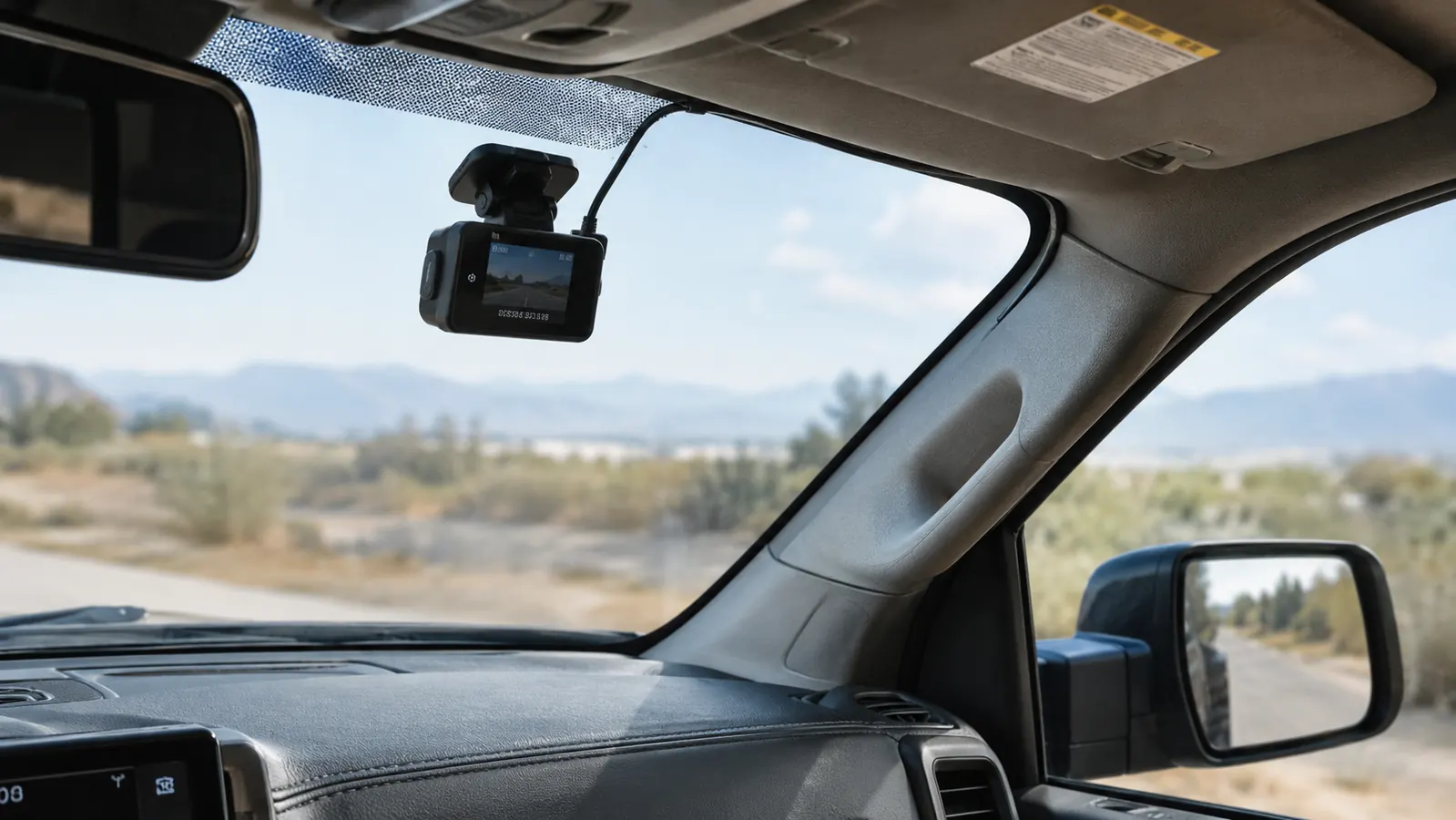
The windshield mount also keeps your view exactly as it was. The REDTIGER tucks behind the mirror, where I do not see it while driving, and my normal mirror works the same as always. That sounds like a small thing until you drive with a mirror screen for a while. The WOLFBOX screen is bright and clear, but it is a screen, and on a sunny day or at night your eyes have to refocus differently than they do on a glass mirror. Some people never notice. I did.
Installation was easier on the REDTIGER too. The front unit mounts to the glass, the power cable runs along the headliner and down the A-pillar, and the rear camera wire follows the headliner to the back glass. The WOLFBOX straps onto the existing mirror with rubber bands, which is quick, but its size meant it sat lower than I liked and vibrated a bit on rough pavement until I snugged the straps. Its rear camera cable runs the same way, so the wiring work is about equal.
Heat is something to think about in the South. A dash cam lives on the windshield, which is about the hottest spot in a parked truck. Through some warm afternoons, neither camera shut down or lost its settings. Still, the REDTIGER's small body sits tucked behind the mirror out of the worst of the sun, while the big mirror screen takes direct sun across its whole face. If you park outside all day, that is worth weighing.
The dash cam I kept in my F-150
After a month of daily driving and driveway duty, the REDTIGER F7NP is the one I left on the windshield. It records clean 4K video, includes the memory card, and does not ask me to fiddle with it.
Amazon Check Today's Price on Amazon →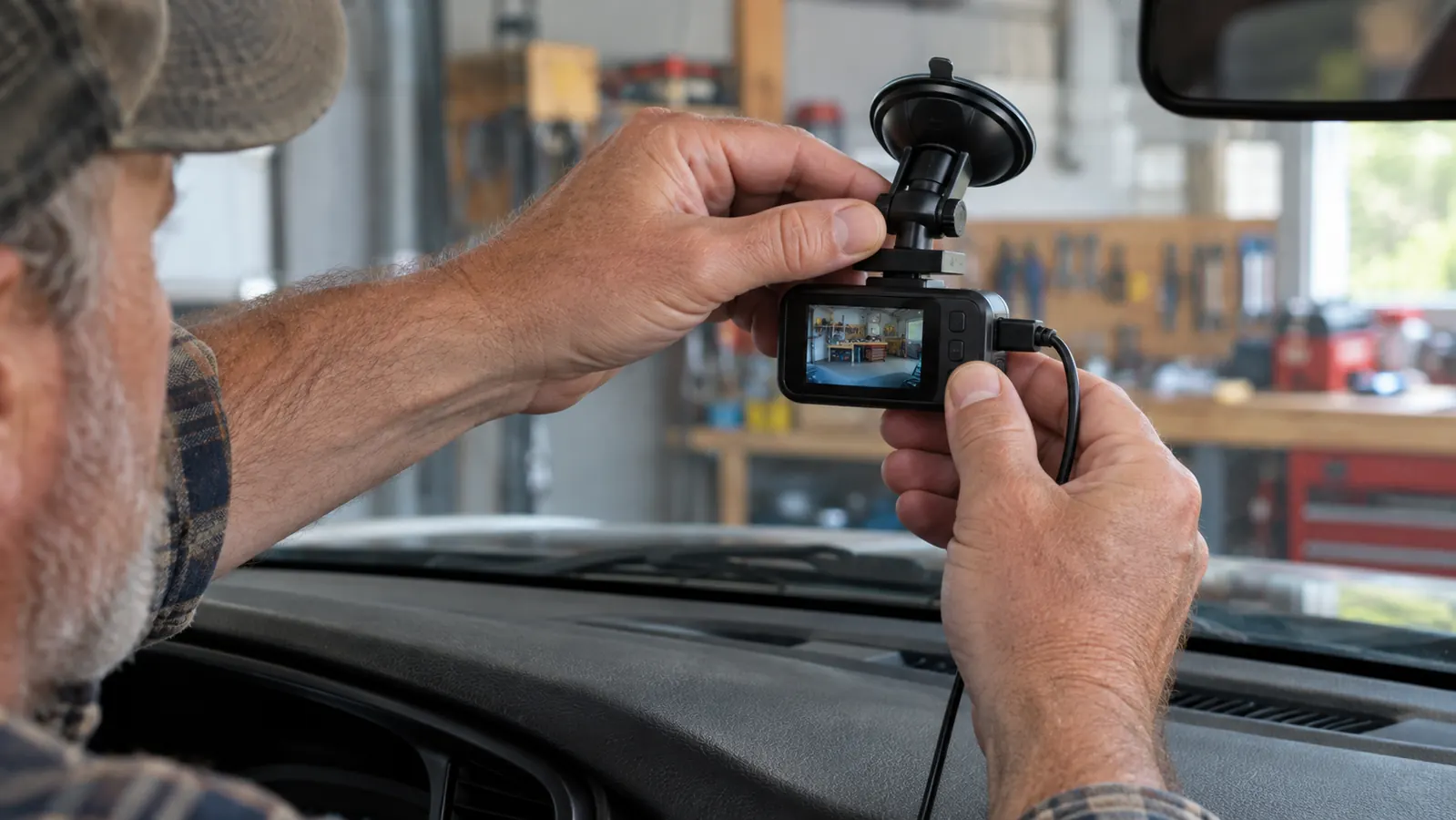
Where WOLFBOX Wins
I will give the WOLFBOX G840S its due. The 12-inch mirror screen is the headline feature, and it genuinely replaces your rearview mirror with a live view from the rear camera. If you drive a van, a work truck with a tall cap, or anything with a blind spot behind it, that big screen is useful. I could see the whole bed of my F-150 and the driveway behind me without turning around. That is a real advantage when you are backing up to a trailer or watching a neighbor's kid on a bike.
That rear view feature is not a gimmick in a pickup. When the truck bed is loaded with lumber or a tool box blocks the back glass, a normal mirror shows you very little. The WOLFBOX shows the rear camera feed across the whole mirror, wide and clear, which can make lane changes and backing easier. If you tow or haul often, that alone might decide it for you.
The WOLFBOX also has a buffered parking mode, which means it can record a few seconds before the impact, not just after. That is a nice feature if you park on the street. But it needs a hardwire kit and a more careful install, and the mirror mount uses straps that I did not trust as much as a solid suction mount. The screen is also bright at night, even on the lowest setting, and it took me a while to find an angle that did not glare off the windshield. For a daily commuter who wants a mirror replacement, the WOLFBOX is a solid choice. For my money, it is more than a weekend mechanic needs.
To be fair, both cameras need a hardwire kit to do parking mode properly, because running a camera off a constantly powered socket can drain the battery overnight. With the kit installed, the WOLFBOX's buffered recording captures a few seconds before an impact, which gives you a better chance of seeing what hit you. The REDTIGER's parking mode works too, but if parking lot dings are your main worry, the WOLFBOX handles that job a little better.
The WOLFBOX touchscreen is also handy for reviewing footage right in the truck. You can swipe through clips on the big screen without pulling out your phone. On the REDTIGER, the small screen is fine for setup and a quick look, but for reviewing anything longer I use the app over WiFi, which takes a minute to connect and works well once it does.
Who Should Buy Which
Buy the REDTIGER F7NP if you want a dependable front and rear camera that you can install in one afternoon and forget about. It is the better value, it includes the memory card, and the compact screen does not block your view. That is what I recommend to the guys who ask me about dash cams while I am under a car on jack stands.
That describes most drivers I know. If your main goal is a clear record in case of an accident or an insurance dispute, the REDTIGER gives you the better picture, the simpler install, and a cab that looks and works the same as it did before. It is the one I would put in my own truck, and it is the one that stayed there.
Whichever you choose, set it up right on day one. Format the card in the camera, set the date and time, check that the loop length and impact sensitivity suit your roads, and pull a test clip to make sure the rear camera is level. Then format the card every month or so, which is good practice for any dash cam. A camera that has quietly stopped recording is worse than none, because you will trust it on the day it fails you.
Buy the WOLFBOX G840S if you specifically want a full mirror replacement with a 12-inch screen, or if you park on the street and want buffered parking mode. It is a good camera. It is just more money and more setup than most driveway mechanics need. If you are still deciding, start with the REDTIGER F7NP. It is the one I kept.
That makes the most sense for people who tow, haul tall loads, or drive a vehicle with a small or blocked back window. In those cases the mirror screen solves a real problem, and the dash cam comes along with it. If none of that applies, a mirror screen is a bigger change than most people need.
Start with the REDTIGER F7NP
It is the camera I recommend to neighbors who lean on the fender and ask what I run. Dependable video, included card, and a mount that survives a Georgia summer.
Amazon Check Today's Price on Amazon →