
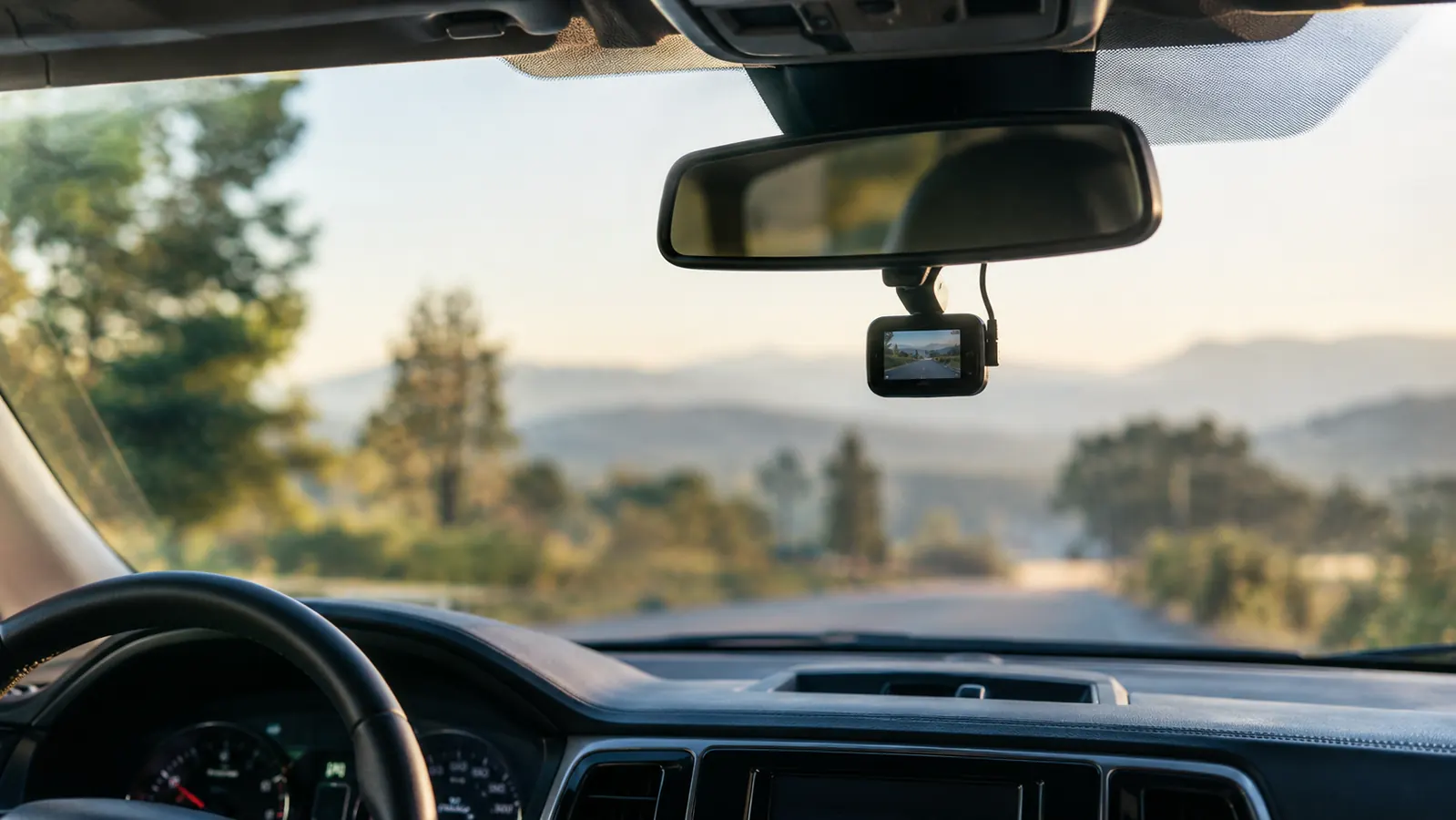
I have been turning wrenches in my driveway outside Dalton for about 30 years, and I have learned to be suspicious of anything with a screen and a marketing budget. So when I decided to put a dash cam in my 2012 F-150, I did what I always do: I read the specs, ignored the hype, and bought the REDTIGER F7NP because the STARVIS 2 sensor and the included card made it look like the least foolish option for the money. Six months and about nine thousand miles later, I can tell you exactly what works, what does not, and what nobody puts in the product photos.
The short version is that the REDTIGER F7NP is a solid 4K front and 1080p rear camera that does the one job a dash cam is supposed to do: it records what happens on the road. It is not the last dash cam you will ever buy, and the parking mode is more complicated than the box suggests. But for a daily driver that sits in a hot Georgia driveway, it has earned its place behind my mirror.
The Quick Verdict
A dependable 4K front and 1080p rear dash cam with a genuinely good sensor and a free card, held back by a fiddly parking mode and a mount that can loosen in summer heat.
Amazon Check Today's Price →Want a dash cam that actually captures plates at night?
The REDTIGER F7NP uses a STARVIS 2 sensor on the front camera, which is the same class of sensor you find in cameras twice the price. If you drive at night, this is the feature that matters most.
Amazon Check Today's Price on Amazon →How I Have Used It
I installed the REDTIGER F7NP myself in about 45 minutes on a Saturday morning in early March. The kit comes with a front camera, a rear camera, a power cable long enough to reach the rear window in my crew cab, a trim tool, and a 64GB microSD card already in the box. That last part matters more than it sounds like it should, because most dash cams in this price range arrive without a card, and a dash cam without a card is a paperweight.
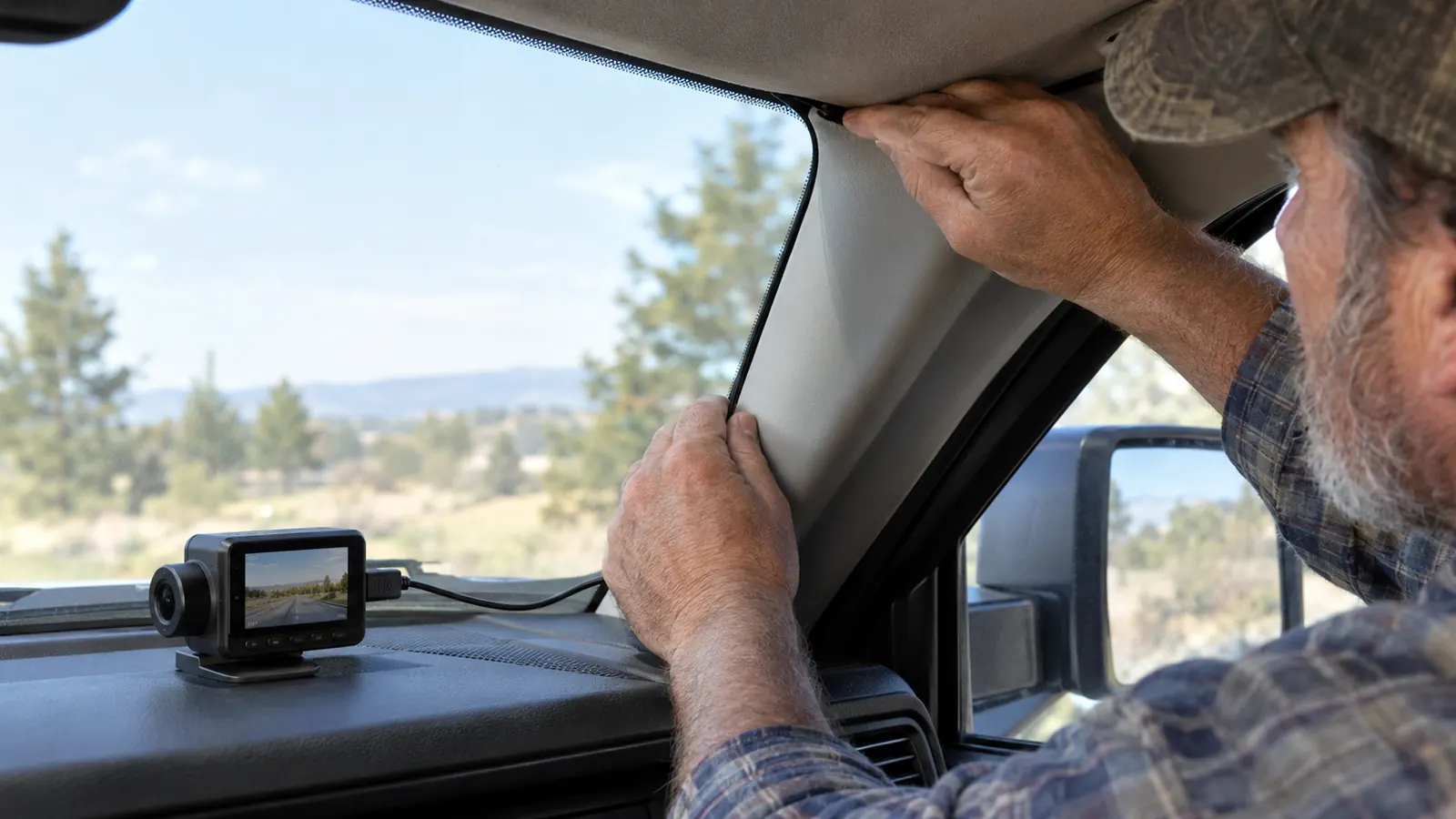
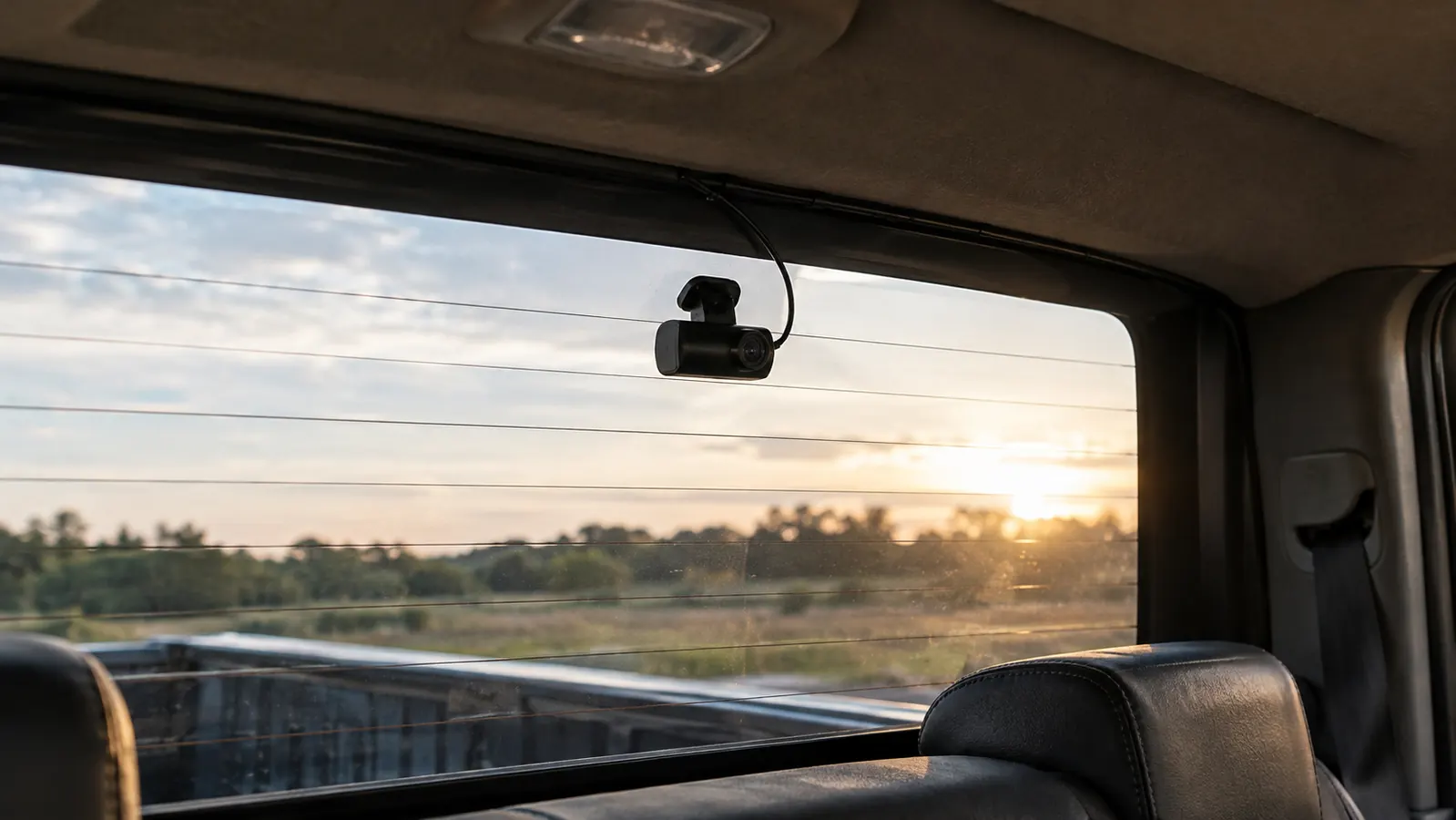
The install is not hard, but it rewards patience. I cleaned the inside of the windshield with glass cleaner first, then held the camera up in a few spots before committing, checking the view on the screen so the hood line sat at the bottom of the frame and the mirror did not block it. The rear camera went at the top of the back glass, centered, with the cable tucked along the headliner. I used the plastic trim tool that came in the box to push the wire under the edges. Take your time on the routing and nobody will ever see a cable.
I ran the front cable up the A-pillar, across the headliner, and down to the cigarette lighter. The rear cable went along the headliner, down the B-pillar, and across the back seat to the rear window. The included trim tool made the job easier than it would have been with a screwdriver, and I did not have to remove any panels. The whole install took one episode of a ball game and a cup of coffee.
Since then, the camera has recorded every trip I have taken, including a 400-mile round trip to visit my sister in Tennessee in May. I have pulled footage off the card maybe a dozen times, mostly to check a weird noise or to show my neighbor something that happened on the interstate. The files are easy to find, the time stamps have stayed correct, and I have not lost a single recording to a corrupted card.
What Nobody Tells You About the REDTIGER F7NP
Here is the part that is not in the marketing photos. The parking mode on the REDTIGER F7NP is not a set-it-and-forget-it feature. It requires a hardwire kit, which is sold separately, and it needs a fuse tap wired into your fuse box. I did that install on a Sunday afternoon in April, and it took me longer than the main camera install because I had to figure out which fuse was the right one for my truck. I spent the first hour with a multimeter checking which slots in the fuse box stayed live with the key off, and I still picked the wrong one the first time. The camera powered down with the truck, which told me I had grabbed an ignition-switched circuit. I moved the tap to the next slot over, and that one stayed live. If you are not comfortable with a multimeter and a fuse tap, you will want to pay someone to do it.
The second thing nobody tells you is that the mount is a suction cup with a sticky pad, and in a Georgia summer, the heat can soften the adhesive. I had the camera fall off the windshield twice in July. The first time it happened, I was backing out of the driveway and heard a thunk. The second time, I found it on the passenger floor mat after a trip to the grocery store. I cleaned the glass with alcohol, re-applied the pad, and it has held since, but I would not trust it in a car that sits in direct sun all day without checking it every few weeks.
The third thing is the app. The REDTIGER app works, but it is not fast. Downloading a two-minute 4K clip to your phone takes a while, and the app occasionally drops the Wi-Fi connection on the first try. I have learned to be patient and to use the card reader when I need a file quickly. The app is fine for changing settings and for grabbing a single clip, but it is not the smooth experience the product page implies.
The camera has never missed a recording in six months. The mount has fallen off twice. That is the honest tradeoff with the REDTIGER F7NP.
Video Quality: Day, Night, and the Important Middle
The front camera records 4K at 30 frames per second, and the rear records 1080p. In daylight, the footage is sharp enough to read a license plate on a car two lanes over, as long as the car is not moving too fast. I tested this on purpose on a Tuesday afternoon in April: I had my neighbor drive past my truck at about 25 miles an hour while I read the plate off the recorded frame. It worked. I could make out the state and the full number without zooming.
Resolution matters most for one thing: reading license plates and street signs. In daylight, I can read the plate of the car ahead of me at a normal following distance, and on a still frame I can usually make out a plate one lane over. That is the detail that matters if you ever need the footage for an insurance claim, because a clip that shows a blur of a car is not worth much to an adjuster.
At night, the STARVIS 2 sensor earns its keep. I drive a stretch of Highway 76 with no streetlights, and the front camera picks up deer eyes and reflector posts well before I would see them in the mirror. Headlights from oncoming cars cause some glare, but the camera handles it better than I expected for this price. The rear camera at night is usable but not great. It will show you that a car is behind you and roughly how far away it is, but do not expect to read a plate from the rear camera after dark.
The one video issue I have found is that the front camera can struggle with direct low sun. On a clear winter morning, driving east, the sun washes out the center of the frame for a few minutes. That is physics, not a defect, and every camera I have used does the same thing. The REDTIGER F7NP just does it a little less than my old camera did.
Build Quality and the Hot Georgia Test
I have left this camera in my truck through a north Georgia summer, which means it has seen interior temperatures well over 140 degrees. On the hottest afternoon in July, the thermometer on my workbench read 146 degrees inside the cab after the truck had sat in the sun for six hours. The plastic body has not warped, the screen has not developed dead pixels, and the lens has not fogged. The adhesive on the mount is the only part that has failed, and that is a consumable part you can replace.
The buttons on the side of the camera are small but clicky, and I have learned to use them without looking. The screen is bright enough to see in daylight, which is more than I can say for some cameras I have tried. The included 64GB card has held up fine, and I have formatted it twice in six months, which the camera prompts you to do. That is normal maintenance, not a problem.
The memory card is the other piece people forget. The camera loops, so it writes over the oldest footage when the card fills, and it locks a clip when its sensor detects a hard bump. I format the card in the camera once a month, which is good practice for any dash cam, and I have not had a corrupted file since I started doing it.
One thing I appreciate is that the REDTIGER F7NP does not run hot. I have had dash cams that got warm enough to worry me, and this one stays cool to the touch even after a two-hour drive. I checked it on the way back from Tennessee in May, after the truck had been running for two and a half hours in 80-degree weather, and the camera body was barely warm. That matters in a truck that already runs warm in July.
The Parking Mode Question
I want to be fair about the parking mode because it is the feature that pushes this camera from good to great for some people, and it is the feature that will disappoint others. The REDTIGER F7NP can record when the truck is off, but only if you buy the hardwire kit and wire it into a fuse that stays live. I did that, and it works: the camera goes into a low-power mode and wakes up when it detects motion or a bump.
The catch is that the parking mode will drain your battery if you leave it on for days. I have a 2012 F-150 with a battery that is two years old, and I have not had a problem leaving the camera in parking mode overnight. But if you park for a weekend at an airport, you should either turn parking mode off or make sure your battery is healthy. The camera has a voltage cutoff setting, but I would not rely on it as your only protection.
If you want parking mode, the right way to do it is a hardwire kit that connects to the fuse box and shuts the camera off before the battery drops too low. It is sold separately, and installing it means finding a switched fuse and a constant fuse with a test light. It is not a hard job if you have done basic car wiring, but if you have not, a shop can do it quickly. Do not run parking mode off a lighter socket that stays powered, or you may find a weak battery in the morning.
For me, the parking mode is a nice-to-have, not a reason to buy. I park in my own driveway at night, and the camera is pointed at the street. If someone backed into my truck, I would want the footage. But I would not buy the REDTIGER F7NP for parking mode alone, because the hardwire install is more work than most people expect.
Who This Is For
The REDTIGER F7NP is for the driver who wants a reliable front and rear camera without spending a fortune, and who is willing to spend an afternoon installing it. It is for the person who drives at night and wants a sensor that can actually see in the dark. It is for the person who has been burned by a dash cam that arrived without a card, because this one includes a 64GB card that works.
It is also for the person who does not want to think about their dash cam. Once it is installed, the REDTIGER F7NP just records. It starts when the truck starts, it stops when the truck stops, and it overwrites the oldest footage when the card is full. I have not touched the settings since the first week, and I have not had to.
Who Should Skip It
Skip the REDTIGER F7NP if you want a dash cam you can install in five minutes with no tools. The suction mount is easy, but routing the rear cable takes time, and the parking mode hardwire is a real project. If you are not comfortable working around your fuse box, you will either pay for installation or skip parking mode entirely.
Skip it if you need the absolute best night video from the rear camera. The rear camera is fine, but it is not in the same class as the front. And skip it if you want a polished phone app, because the REDTIGER app is functional but not slick. None of these are dealbreakers for me, but they are the things I would want to know before I bought one.
What I Liked
- STARVIS 2 front sensor delivers genuinely good night video
- 64GB card included, so it works out of the box
- Front and rear coverage for the price of a single-camera unit
- Runs cool even in a hot Georgia summer
- Reliable recording: six months, zero missed files
Where It Falls Short
- Suction mount adhesive can loosen in extreme heat
- Parking mode requires a separate hardwire kit and a real install
- Phone app is slow and occasionally drops the connection
- Rear camera night video is only average
- No GPS module included, so no speed or location stamp on the footage
The bottom line on the REDTIGER F7NP
It records reliably, sees well at night, and includes the card you need. The mount and the app are the weak spots, and the parking mode is a project. If you want front and rear coverage without spending a fortune, this is the one I would buy again.
Amazon Check Today's Price on Amazon →